Get a free review

A practical guide for UK service businesses

Website not getting enquiries?
Find your next useful check.

A quiet inbox can start with poor visibility, unsuitable visitors, an unclear offer or a contact fault. Check the evidence before paying for more traffic or rebuilding your website.

By Imran Nadem, Fluent State · Published 14 November 2026 · Free to use, with no signup.

The short answer

Find the gap.
Then choose the work.

First check that enquiries can reach you. Then separate getting found from persuading the right visitor to contact you. Search appearances, website visits, a phone-button tap and a genuine enquiry tell you different things.

  1. Test the contact route. Check your published phone number, email links and form delivery on a phone. Label any test so it is excluded from customer enquiries.
  2. Check who is arriving. In Search Console or Bing Webmaster Tools, inspect the searches and landing pages. A homeowner seeking a cleaner is a different visitor from a cleaning-company owner seeking marketing help.
  3. Review the decision page. Can a suitable customer recognise the service, actual working area, relevant evidence and next step?

A handful of visits does not establish that a price, design or enquiry rate is wrong. Look at relevant traffic over comparable dates and allow for the time customers take to decide.

Free four-question check

What should
you inspect first?

Choose what you actually know. This guide uses your answers to suggest checks; it does not crawl your website or diagnose a fault.

Your choices stay on this page. They are not sent to us, saved as an enquiry or used to calculate a sales forecast.

Use search terms and landing pages to assess relevance. Total hits alone cannot tell you who might buy.

Real work / A closer look

Make the decision
easier to take.

Two examples from websites we delivered. Look at the actual page features and the customer decision each one supports.

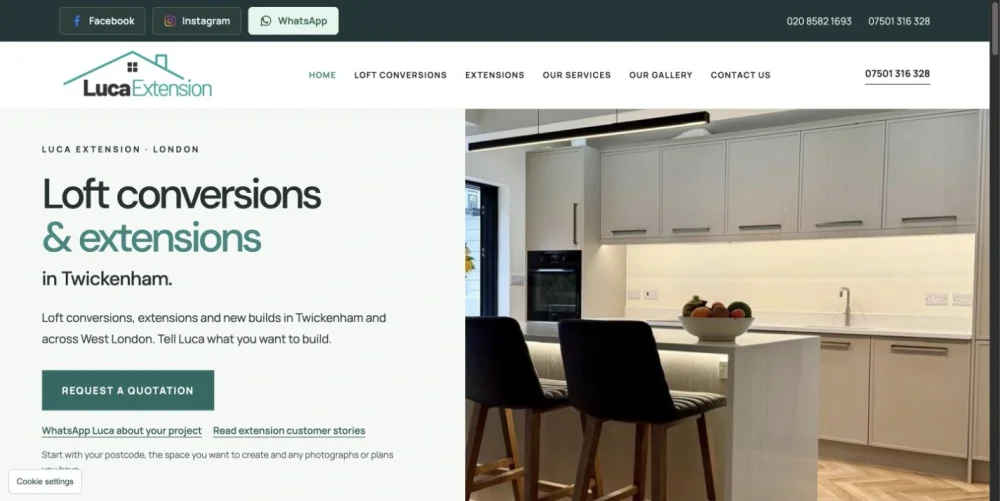
The delivered Luca Extension website with its building services and project photographs

Luca Extension / Construction

A service and a real working area.

Luca’s live house-extension page names Twickenham and explains rear and side-return work. Source-linked customer accounts and project photographs give a homeowner evidence to inspect. A project enquiry form, phone and WhatsApp offer different ways to start.

Apply the principle: connect a service your customer wants to the work you can show and the details you need for a useful enquiry.

Inspect the live extension page
CBR Staffing’s delivered driver service page with staffing information and separate employer and candidate routes

CBR Staffing LTD / Recruitment

The right route for each visitor.

CBR’s driver page explains the staffing service and links employers to “Request staff”. People looking for work have a separate route. That distinction helps each audience find its next step instead of sending everyone to the same vague request.

Apply the principle: separate customers from job applicants, support requests or other audiences when they need different information.

Inspect the live driver page

Website delivery by Fluent State. Screenshots captured 26 October and 12 November 2026; live page features checked 14 November. These examples show delivered work and design reasoning; they do not establish additional enquiries or revenue.

When suitable customers rarely arrive

Work on
getting found.

Check that the right service page is accessible and indexed. Review the searches, countries, positions and landing pages in your available Google and Bing data. A page can be indexed and still appear too far down the results to receive many visits.

Build useful service information around genuine customer questions and actual coverage. Connect it with relevant internal links and real project evidence. Repeating the same content for every town is not a substitute for a useful page.

When relevant visitors already arrive

Work on
the decision.

Ask a fresh visitor to explain what you do, who it is for, where you work and how to enquire. Watch where they hesitate. Inspect mobile readability, actual evidence, pricing or quotation steps and the contact route.

If those work, review the offer, visitor intent and decision times before assuming a redesign is required. A customer may compare providers or return later. Use evidence to choose the next change.

Measure what
you want to improve.

Use the same date range and audience when comparing weeks. Exclude your own testing, duplicates and spam from enquiry totals. Search Console clicks are not the same as analytics sessions, and all website enquiries cannot automatically be attributed to Google.

Record genuine requests by source where supported. An AI mention, a phone-link tap and a customer conversation are separate stages. Google’s AI search features use the same SEO foundations; clear, accessible, useful pages help establish eligibility, but appearance is not guaranteed.

For costs and commitment, use our small-business SEO price guide and quote comparison. Explore the focused approaches for building companies and commercial contractors, tradespeople and cleaning companies when those fit your services. If your trade relies on local calls, check where your Google Maps website link sends customers.

Your next step / Email or phone

Let’s review
your actual website.

Send your website, priority services and working area. We’ll email up to three practical priorities from your public online presence, so you can decide what to tackle first.

Choose the work after the review.

Monthly SEO is £349 rolling, or £299/month for three months (£897 total), with the same defined monthly scope. Scope, compatible access and your selected terms are agreed before payment. A rebuild or standalone correction is separately scoped.

The free review starts no payment or subscription. Compare the SEO options or email Fluent State.

Sources and method.

Written by Imran Nadem, founder of Fluent State, using the delivered website examples above and public search guidance. This is a practical starting point for service businesses, not a measured industry conversion benchmark.

Guidance checked 14 November 2026. The guided check applies simple rules to your answers. It does not access your website, analytics or contact systems.